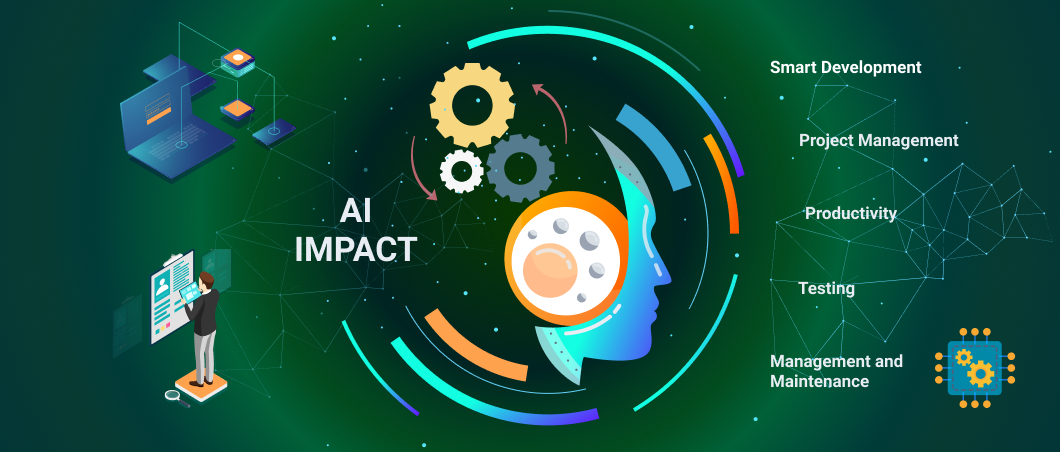
The Rise of AI Software Development
The emergence of AI software development has profoundly transformed the technology landscape, propelled by remarkable advancements in various associated fields. Notably, the evolution of machine learning algorithms, the expansion of neural networks, and refinements in data analytics have set a foundation for the integration of artificial intelligence into software solutions. Businesses are progressively adopting AI-enhanced software applications, recognizing their capacity to automate processes, analyze vast data sets, and facilitate decision-making.
One pivotal factor underlying the growth of AI software development is the increasing availability of large datasets. The digital transformation across industries has generated enormous volumes of data, which AI systems can leverage to identify patterns and deliver insights. This has led to a surge in demand for AI-driven solutions, with organizations in sectors such as healthcare, finance, and retail actively seeking tools that optimize performance and reliability.
Statistical insights demonstrate this upward trajectory. According to a report by Gartner, it is projected that by 2025, 75% of enterprise-grade applications will be integrated with AI functionalities. Moreover, a study by McKinsey indicates that businesses that fully leverage AI in software applications could achieve a productivity boost of up to 40%. These figures underscore the pivotal role that AI software development plays in enhancing operational efficiency and driving innovation.
Furthermore, the rise of AI software development has also been fueled by the advancements in cloud computing and infrastructure. This technological evolution allows for the storage and processing of extensive data sources necessary for training and deploying AI models. As a result, organizations, regardless of size, can access sophisticated AI tools that were previously only available to tech giants, leveling the playing field.
In summary, the exponential growth of AI software development is intricately linked to technological advancements, increased data availability, and the evolving needs of businesses seeking superior solutions. This trend is poised to redefine the technological landscape in the coming years.
Key Technologies Behind AI Software Development
AI software development is fundamentally rooted in several core technologies that facilitate the creation of intelligent applications. Among these, machine learning frameworks stand out as pivotal elements. These frameworks, such as TensorFlow, PyTorch, and Scikit-learn, provide developers with pre-built components and tools, enabling efficient training and deployment of machine learning models. By leveraging these frameworks, developers can focus on innovating and optimizing their algorithms rather than starting from scratch, thus accelerating the pace of AI software development.
Another significant aspect of AI software development is natural language processing (NLP). This technology equips machines with the ability to understand and interpret human language, enabling applications such as chatbots, sentiment analysis, and translation services. NLP algorithms rely on linguistic rules and statistical methods, making them particularly crucial in bridging communication gaps between humans and machines. Seamless integration of NLP into software applications improves user interaction and accessibility.
Computer vision also plays a central role in driving advancements in AI software development. By enabling applications to interpret and process visual data, this technology is instrumental in various fields, including healthcare, automotive, and security. Popular libraries such as OpenCV and Keras facilitate the development of computer vision applications, allowing for functionality like image recognition and video analysis.
Finally, robotics is an emerging area intertwined with AI software development. Robotics combines AI with physical hardware to perform tasks traditionally handled by humans. It incorporates elements from machine learning and computer vision to enhance the autonomy and efficiency of robotic systems. Programming languages such as Python and C++ are commonly utilized in the development of these robotic systems, providing high-level abstraction and control required for managing complex algorithms.
Overall, the integration of these technologies into the software development process significantly enhances functionality and user experience, making AI-driven applications more powerful and versatile.
Challenges and Considerations in AI Software Development
AI software development comes with a unique set of challenges that developers must navigate to ensure that their systems are fair, effective, and aligned with ethical standards. One of the most pressing issues is data privacy. The reliance on vast amounts of data to train AI algorithms raises concerns regarding the collection, storage, and use of sensitive information. Developers must adhere to stringent regulations, such as GDPR, ensuring that personal data is protected and that users are informed about how their information is utilized. Striking a balance between leveraging data for improved AI functionalities and respecting individual privacy is critical.
Moreover, algorithmic bias is an inherent risk during the development of AI systems. Machine learning models are trained on datasets that may reflect societal biases, leading to discriminatory outcomes in areas such as hiring, criminal justice, and healthcare. It is essential for developers to identify potential biases within training data and implement techniques such as bias detection and mitigation strategies. Understanding the source of bias and continually refining the data and algorithms can help in fostering more equitable AI solutions.
Transparency in AI systems is another cornerstone of responsible software development. Users and stakeholders need insights into how decisions are made, especially in high-stakes applications. This demand for transparency compels developers to create AI models that not only perform effectively but also offer clear explanations of their decision-making processes. Case studies highlighting previous AI projects reveal how lack of transparency contributed to public distrust and negative perceptions, underscoring the importance of accountable AI practices.
Ethical considerations must guide every step of the AI software development process. By fostering a culture of responsibility, developers can shape innovative technologies that respect human rights and promote social good. Ultimately, overcoming these challenges will lead to the creation of AI systems that are not only technically proficient but also morally sound.
The Future of AI Software Development
The landscape of AI software development is poised for significant transformation as we advance into the coming years. With the integration of advanced algorithms and machine learning techniques, we can expect to see an increasing collaboration between artificial intelligence and human intelligence. This synergy is likely to enhance decision-making processes, optimize workflows, and drive innovative solutions across numerous sectors.
Emerging industries are likely to embrace AI software development, leading to diverse applications that could revolutionize various fields. For instance, sectors such as healthcare, finance, and climate science are already experiencing the benefits of AI-driven insights and automation. In healthcare, AI algorithms can analyze vast datasets to assist in diagnostics and patient management, while in finance, predictive analytics can help in identifying market trends and managing risks. Such innovations are going to create new opportunities for developers, emphasizing the need for adaptability and the acquisition of new skills.
As AI continues to evolve, developers must prepare for a shift in methodologies. Familiarity with advanced technologies, such as neural networks and natural language processing, will become essential. Additionally, understanding ethical implications and the social responsibilities associated with AI software development will be crucial. Developers will need to foster an awareness of biases that may emerge from AI systems and strive for transparency in their implementations.
This evolving landscape invites developers to embrace lifelong learning while remaining agile in their approach. The future of AI software development is not just about automation; it is about enhancing human capability and creativity through intelligent systems. The promise of AI lies in its potential to empower human innovation, thus transforming the way we approach problems and design solutions. As we navigate this exciting frontier, how we harness AI technology will define the next era of software development.